
Work Philosophy
How we approach education in building sensor technology and IoT-based property monitoring for the Argentine real estate sector.
Accessible Technical Education
Technology education often assumes technical backgrounds that many real estate professionals do not possess. We bridge this gap by explaining complex concepts in accessible language without oversimplifying.
Our approach recognizes that understanding how technology works differs from knowing how to build it. We focus on conceptual clarity that enables informed decision-making rather than engineering-level detail.
This means translating technical terminology into practical understanding, using analogies that connect to familiar real estate concepts, and building knowledge progressively from foundational concepts.
Context-Specific Learning
Generic technology education fails when it does not address specific contexts. Argentine real estate has particular characteristics: building types, climate zones, regulatory environments, and market dynamics that shape how technology applies.
We develop content that acknowledges these realities. Examples use local building contexts. Discussions consider Argentine regulatory frameworks. Applications address challenges specific to managing properties in Buenos Aires and other Argentine markets.
This contextual grounding makes learning immediately relevant and helps professionals understand how technology fits within their existing work rather than feeling like abstract concepts from elsewhere.

Core Educational Principles
Several principles guide how we develop and deliver educational content.
Progressive Complexity
We introduce concepts in layers, building from fundamentals to more sophisticated understanding. Each layer provides value while preparing for the next level of depth.
Practical Application Focus
Theory serves practice. Every concept connects to how it applies in real property contexts. We emphasize understanding that enables action rather than abstract knowledge.
Interactive Learning
Learning happens through engagement, not passive consumption. We create opportunities for questions, discussion, and hands-on exploration of concepts.
Continuous Updates
Technology evolves. Our content evolves with it. We regularly update resources to reflect current technology, emerging practices, and new applications.
Multi-Format Learning
People learn differently. Some prefer reading detailed explanations. Others learn better through visual demonstrations. Many benefit from interactive discussion.
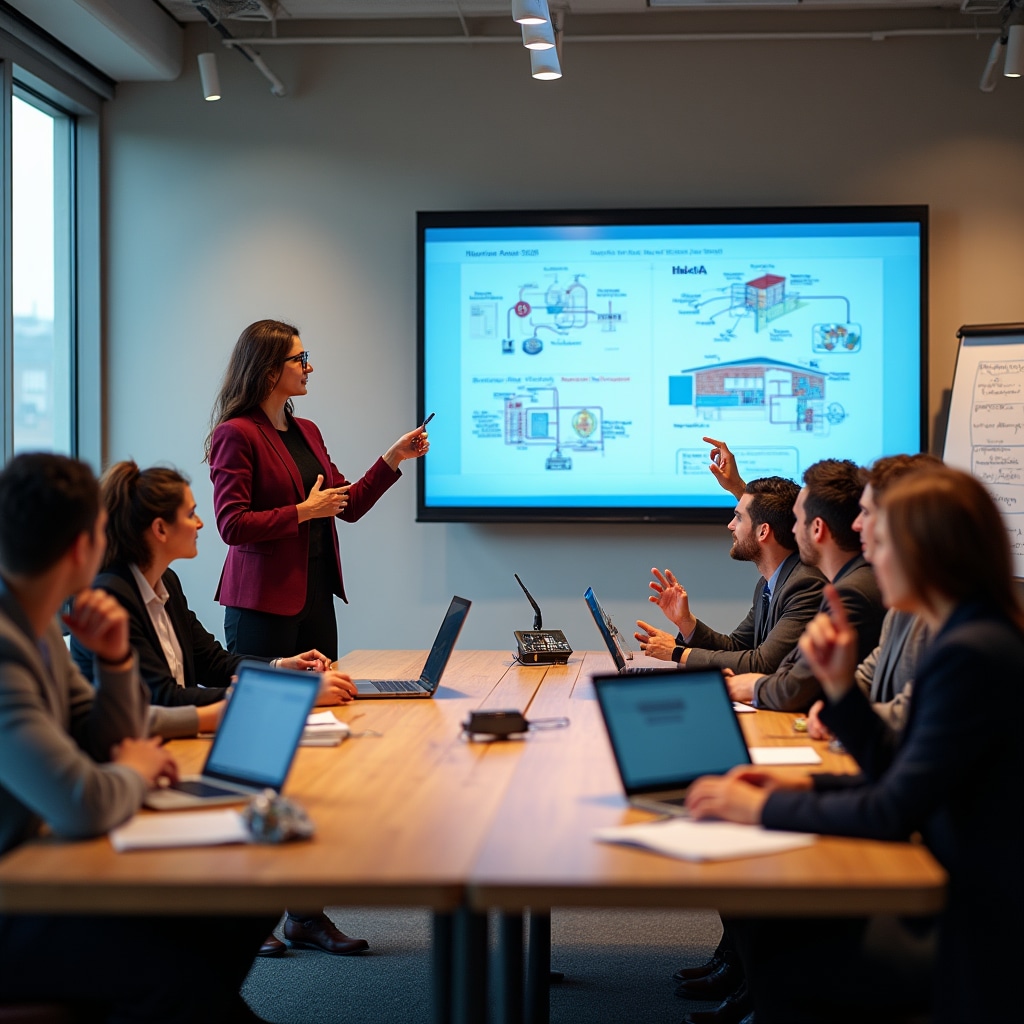
We develop content in multiple formats to accommodate these different learning preferences. Written guides provide depth and reference material. Videos demonstrate concepts visually. Workshops enable interactive exploration and peer learning.
This multi-format approach ensures that professionals can engage with material in ways that work for their learning style and schedule constraints.
Real-World Grounding
Abstract technology concepts become meaningful when connected to real situations. We use case studies, examples, and scenarios drawn from actual property contexts.
These real-world connections help professionals see how technology addresses familiar challenges. A sensor monitoring system becomes concrete when discussed in the context of preventing water damage in a specific building type.
This grounding transforms technology from something foreign into a tool that extends existing property management capabilities.
Building Understanding Together
Education works when it respects the knowledge professionals already bring while expanding their understanding into new domains. We approach teaching as collaboration rather than transmission.
Real estate professionals understand properties, occupants, and management challenges deeply. We provide technology knowledge that enhances this existing expertise rather than replacing it.